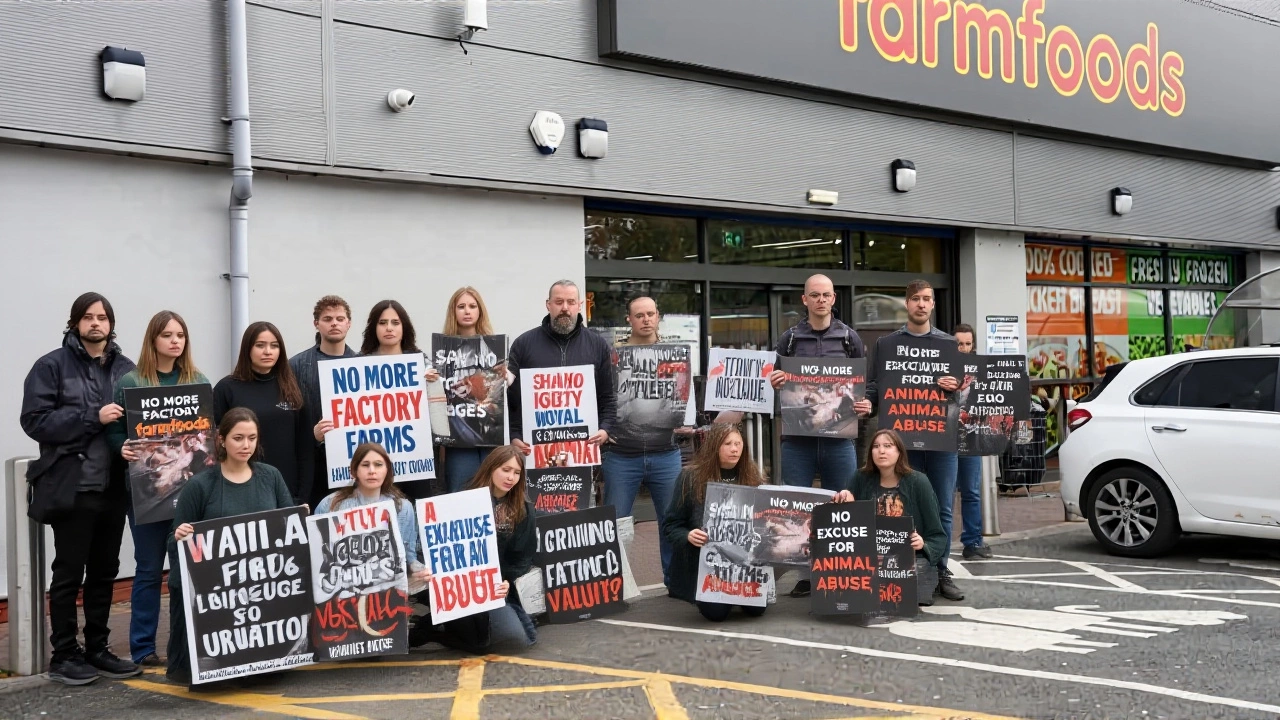
On November 29, 2025, the ASPCA announced $160,305 in grants for seven grassroots projects aimed at dismantling factory farming across the U.S.—marking its fourth straight year partnering with the Socially Responsible Agriculture Project (SRAP). The funding isn’t just money. It’s a signal: communities are no longer waiting for federal action. They’re mapping pollution, training residents, and building alternatives—with real teeth. Factory farming isn’t just cruel; it’s a public health crisis, an environmental disaster, and a moral failure. And people are finally saying: enough.
Grassroots War Against Pollution and Power
In Robeson County, North Carolina, CleanAIRE NC is deploying air sensors in neighborhoods choked by poultry dust and ammonia. The county has the worst public health ranking in the state—and it’s no accident. Factory farms cluster where regulatory oversight is weakest and residents have the least political clout. Meanwhile, in Wisconsin, Midwest Environmental Advocates is launching a multimedia campaign showing how rural families are organizing against corporate agribusiness. These aren’t protests. They’re precision campaigns: data-driven, community-led, and unapologetically local.One of the most powerful tools emerging is transparency. The Missouri River Bird Observatory is building interactive dashboards that track factory farm pollution in Missouri watersheds—and overlay them with maps of poverty, race, and chronic illness. The pattern is chilling: the same zip codes drowning in manure runoff are also the ones with the highest rates of asthma and kidney disease. This isn’t coincidence. It’s policy.
Ballot Boxes as Battlefields
While federal action stalls, cities and counties are taking matters into their own hands. In Sonoma County, California, a ballot initiative backed by World Animal Protection US would ban new factory farms and phase out existing ones within three years. It’s not symbolic—it’s enforceable. And in Berkeley, the first-ever U.S. ballot measure targeting factory farming landed despite the city having zero such operations. Why? Because the precedent matters. It forces other cities to reckon with what’s coming.Support isn’t just from animal lovers. A 2019 poll cited by World Animal Protection found 43% of U.S. voters back banning new factory farms. That’s a majority in many states. And now, those voters are being mobilized. In Arizona, over 650 advocates organized by Animal Equality flooded Governor Katie Hobbs’ office after she delayed the state’s 2022 cage-free egg law to 2034. The pressure worked: by late 2025, major retailers like Ahold Delhaize pledged to source only uncaged eggs by year’s end.
Washington’s Slow Dance and Europe’s Leap
Senator Cory Booker introduced the Farm System Reform Act (FSRA) in 2020 and re-introduced it in 2021. The bill would halt new and expanded concentrated animal feeding operations (CAFOs) and phase out the largest by 2040. It’s the most ambitious federal proposal ever. But it’s stuck in committee. No hearings. No votes. Meanwhile, the Humane Society International (HSI) warned in April 2025 that the next global pandemic could emerge from a factory farm—where overcrowded animals, stressed immune systems, and antibiotic misuse create the perfect storm for zoonotic viruses.Europe is moving faster. In March 2025, Animal Law Europe and the European Environmental Bureau (EEB) held an exhibition at the European Parliament titled “Factory Farming: Unveiling the Hidden Costs.” One image, showing pigs gasping in CO₂ chambers, was deemed too graphic for display. The irony wasn’t lost on activists. Commissioner Didier Reynders confirmed the Commission is drafting legislation to implement the End the Cage European Citizens’ Initiative—but gave no timeline. Sweden rejected a proposal to scrap summer grazing rules for cows. Germany’s new coalition agreement pledged public funds for farm animal welfare and clearer labeling. The UK’s Animal Sentience Committee endorsed Animal Equality’s call to ban CO₂ stunning. Change is coming. But not evenly.
What’s Next? COP31 and the Climate Connection
At COP30 in Belém, Brazil, industrial agriculture was barely mentioned—despite being the second-largest source of global emissions after fossil fuels, according to World Animal Protection. Joanna Di Dio, Head of Policy and Campaigns, called it a “moral abdication.” The message to world leaders is clear: you can’t claim to fight climate change while subsidizing factory farms.At COP31 in 2026, pressure will mount. Activists are demanding that climate agreements include binding targets to reduce livestock production, protect forests from agribusiness expansion, and fund plant-based food systems in the Global South. Jo-Anne McArthur, founder of We Animals Media, put it bluntly in her closing remarks at the European Parliament: “We built them, and we can dismantle them. They don’t belong in an age where we know about the inner lives of animals.”
Frequently Asked Questions
How do these grants from the ASPCA actually change factory farming?
The $160,305 in grants funds on-the-ground work—air monitoring in North Carolina, community training in Wisconsin, and pollution mapping in Missouri—that exposes the hidden health and environmental costs of factory farms. Unlike top-down policy, these projects empower residents to demand accountability, file lawsuits, and influence local zoning laws. They turn data into power.
Why are ballot initiatives in California and Berkeley so significant?
They prove that voters will support bold action—even in places with no factory farms. Berkeley’s initiative sets a legal precedent: if a city can ban factory farming by vote, other cities can too. Sonoma County’s plan, with its three-year phase-out, shows how transition can work without economic collapse. These aren’t protests—they’re blueprints.
What’s the connection between factory farming and pandemics?
Humane Society International warns that overcrowded, unsanitary conditions in CAFOs breed antibiotic-resistant bacteria and zoonotic viruses. The 2009 H1N1 flu emerged from a pig farm. COVID-19’s origins are still debated, but wildlife markets and industrial farms are both high-risk zones. Reducing animal density and eliminating live markets is a proven pandemic prevention strategy.
Why is CO₂ stunning of pigs controversial?
CO₂ gas causes pigs to gasp, panic, and experience severe distress before losing consciousness—studies show it can take over a minute for them to lose awareness. The UK still permits it, despite scientific consensus that electric stunning is more humane. Animal Equality’s research and the UK’s Animal Sentience Committee have pushed for a ban, but industry lobbying has stalled reform.
How does factory farming contribute to climate change?
Livestock production generates 14.5% of global greenhouse gas emissions—more than all cars, planes, and ships combined. Deforestation for feed crops, methane from manure, and fossil fuels for transport and feed production all add up. World Animal Protection calls it the second-largest climate culprit after fossil fuels, yet it’s rarely addressed in climate summits.
What’s the timeline for ending factory farming in the U.S.?
There’s no national timeline. But Senator Booker’s Farm System Reform Act aims to phase out the largest CAFOs by 2040. Meanwhile, local bans in Sonoma and Berkeley could set off a domino effect. Retailers like Ahold Delhaize are already shifting to cage-free eggs by 2025. Change is accelerating—but it’s happening at the state and corporate level, not Washington’s.